Jennifer O. Reynolds, M.A. & Nora Hickey, D.V.M.
Curious about the easiest cichlid fish to keep? Jen and Nora break down the best beginner-friendly species, the most important tips to know, plus which cichlids fit community tanks and which don’t.
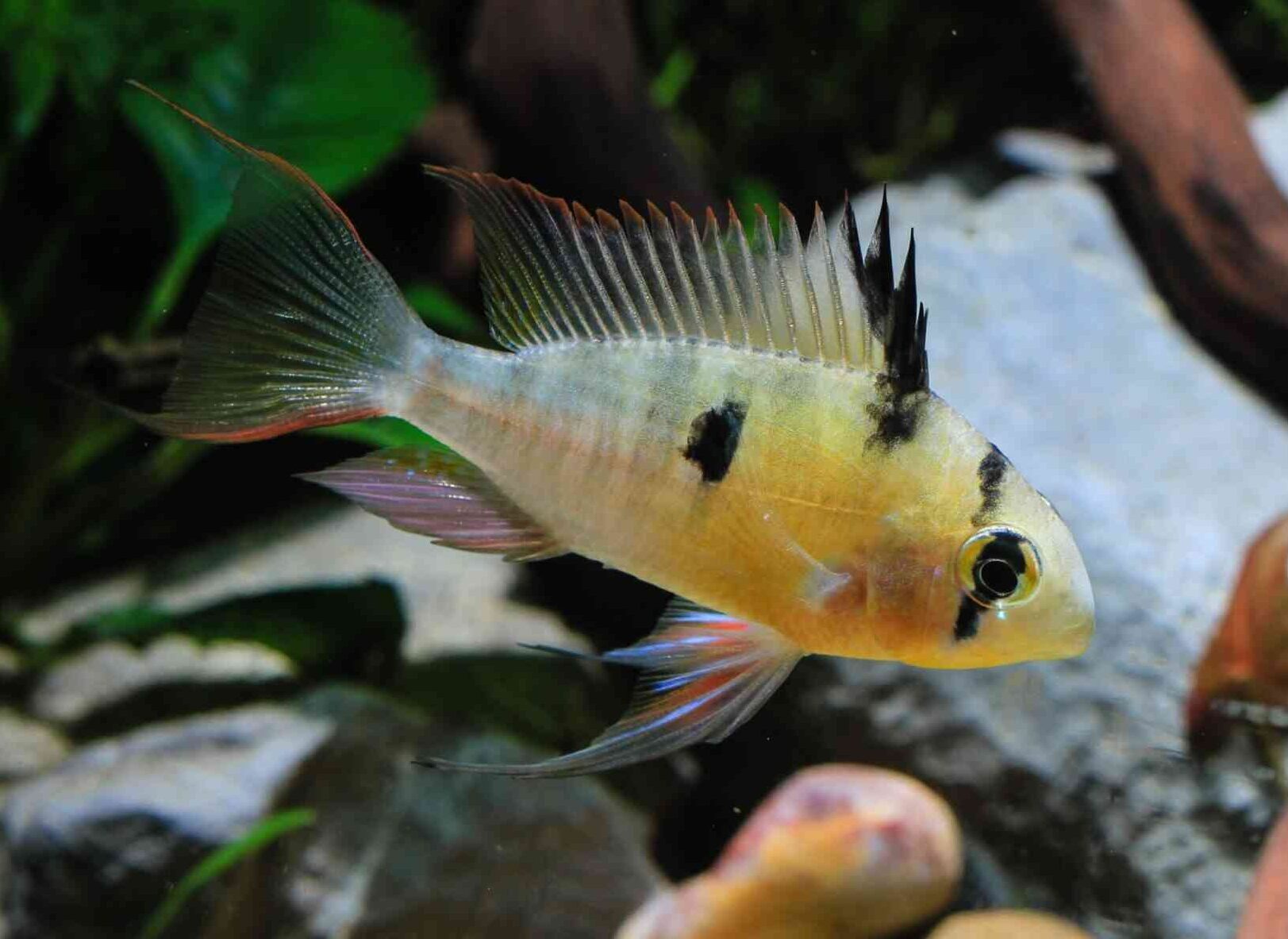
Bolivian Ram (Mikrogeophagus altispinosus)
Nora: Let’s start with a couple of small cichlids that integrate well into existing community aquariums that a hobbyist might have. There are two species of rams commonly available in the hobby, Bolivian rams (Mikrogeophagus altispinosus) and blue/”German” rams (M. ramirezi). Both of these Amazonian species can integrate well into community tanks, although in my experience the Bolivian rams tend to be healthier than the blue rams, with the fancy varieties with long fins or balloon body shapes being particularly prone to health problems.
Jen: Bolivian rams also tend to be a bit more peaceful in my experience. They have gorgeous red caudal fin streamers when mature and just have a subtle but still colourful beauty I always appreciate. They breed relatively easily and are spunky, interactive little fish. Although they can be more difficult to source than blue rams and their various domestic strains, Bolivian rams are well worth waiting for and are often my top recommendation for the community aquarium keeper wanting to branch out into cichlids.
Tips for Success with Bolivian Rams:
- At least 20 gallons is needed for a pair, and a larger is needed if keeping a group.
- Suitable for community aquariums.
- Adaptable to most water conditions, especially if you find captive-bred specimens.
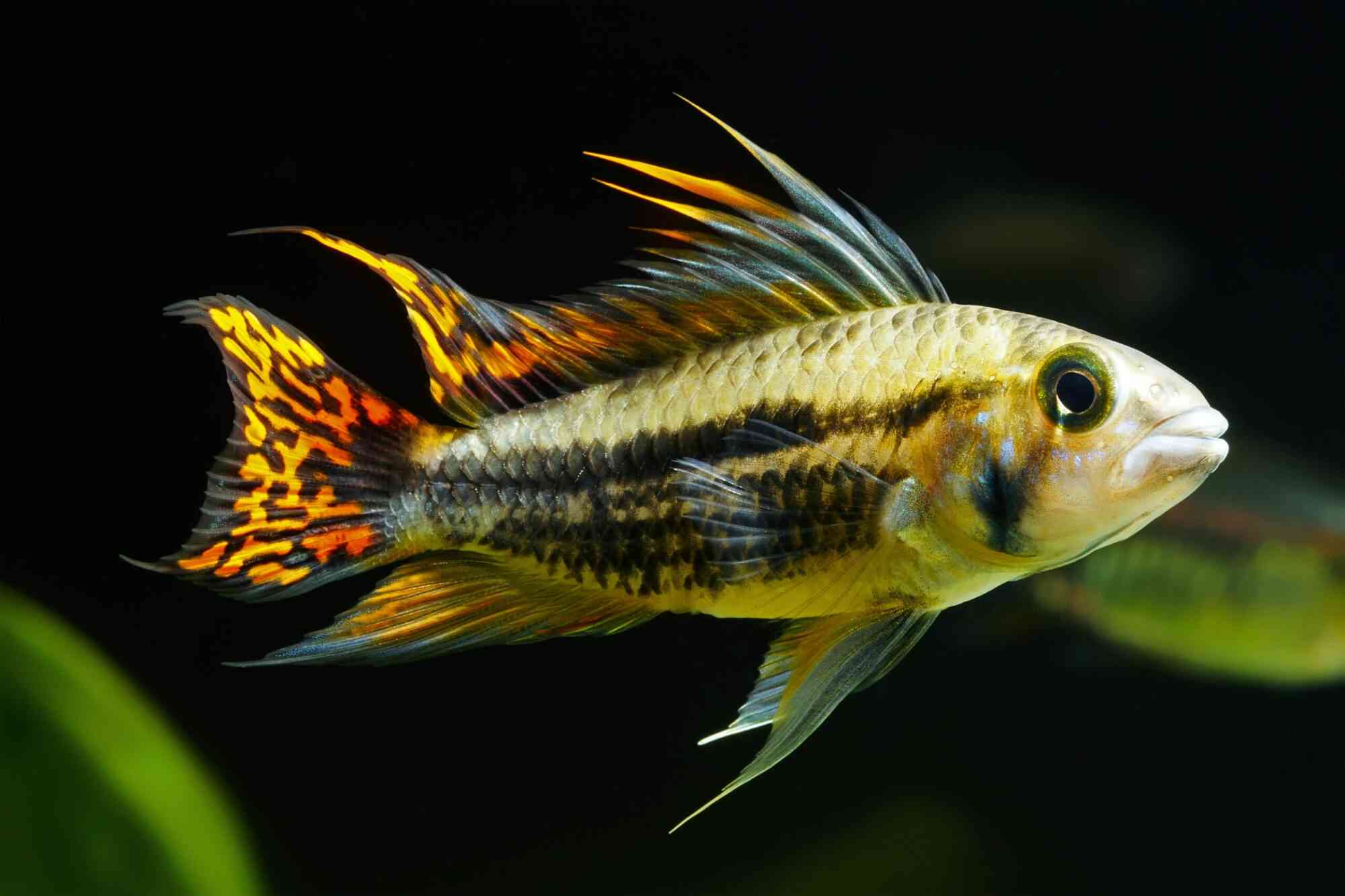
Cockatoo Dwarf Cichlid (Apistogramma cacatuoides)
Jen: Another dwarf cichlid that can be kept in a community aquarium is the dwarf cockatoo cichlid, Apistogramma cacatuoides. Apistos are also from South America and are distantly related to the ram cichlids. They tend to stay closer to the bottom and pick through the sand for food, which is fun to watch. Being among the smallest cichlid species in the hobby, they can live in smaller aquariums, but they’re still territorial. Mature males have absolutely amazing finnage and the females really look after their young, guiding them among the plants, leaves, and caves to find food as they cloud around her. These fish do best eating frozen foods, including frozen bloodworms and brine shrimp that are readily available at local aquarium stores. They also enjoy live foods such as daphnia and artemia nauplii.
Nora: There are a number of different varieties of A. cacatuoides available in the hobby. First time keepers should prioritize the health of the pair they buy over a particular color morph. Like the with Bolivian rams, certain strains of cockatoo dwarf cichlids can be heavily line bred and may be worth passing over for less fancy varieties. Choosing captive bred fish can help select for specimens with less demanding water chemistry requirements and a better appetite for prepared and frozen foods.
Tips for Success with Cockatoo Dwarf Cichlids:
- Recommended to keep in pairs and require 10-15 gallons per pair. They mostly use the bottom of the tank, so lower tanks (e.g. 20 gallon “low”) offer more habitat to them than taller ones.
- Offer plenty of hiding spots like caves and dried leaves. Sand is a preferred substrate so they can dig in it and sift it.
- Can live with other small community fish such as cory catfish, rasboras, and small tetras.
- Adaptable to most water conditions (especially the commonly-available domestic strains like the double-red), but prefer cooler temperatures than some other species. Best to keep temperatures between 20-25℃.
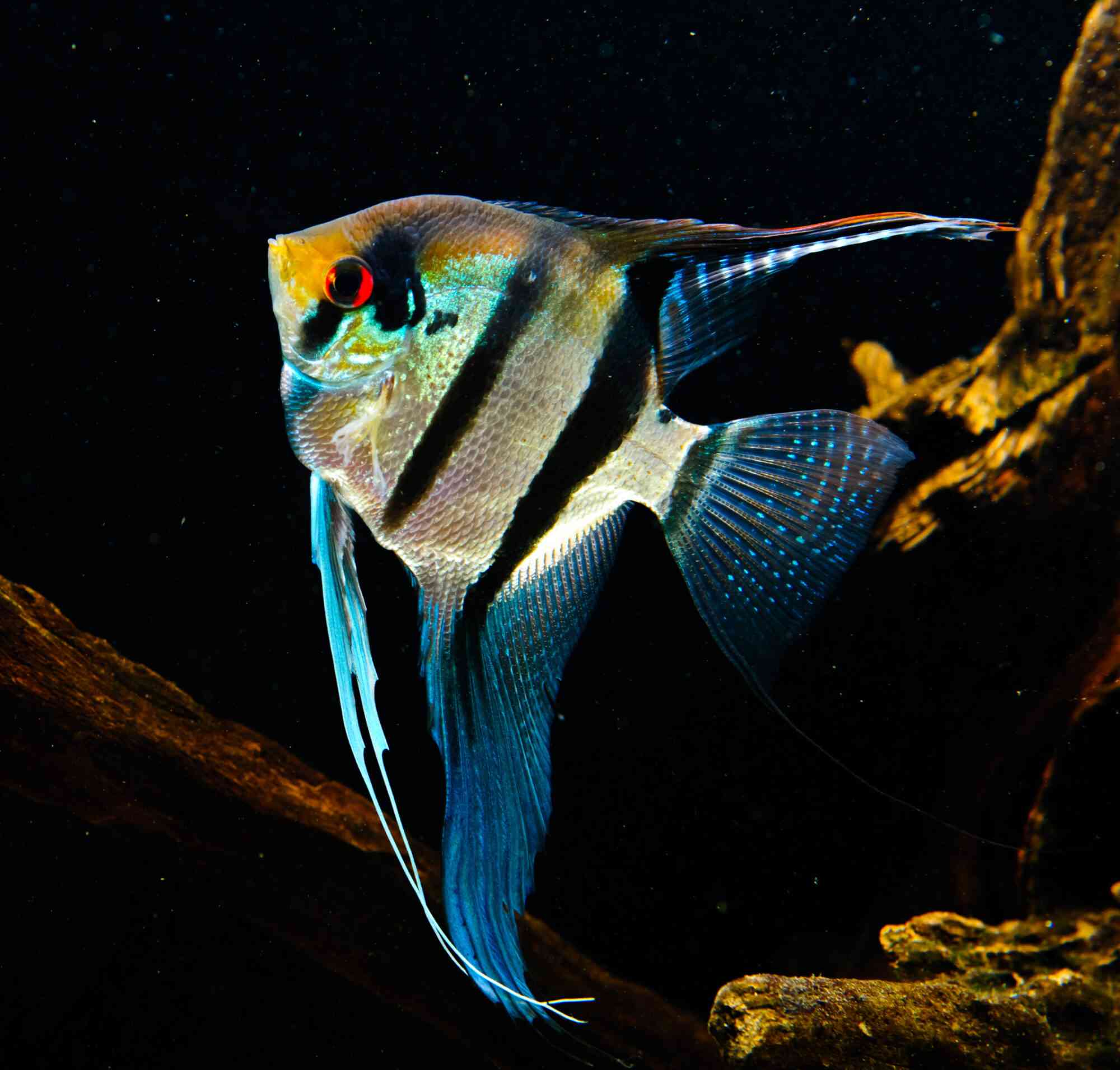
Angelfish (Pterophyllum scalare)
Nora: Angelfish are probably one of the most readily-available cichlids in the hobby, although many people do not realize they are a cichlid! They have a more apparently “cichlid” body shape when they are young. The species of angelfish most commonly available in the hobby, Pterophyllum scalare, has many different varieties.
Jen: I’ve been keeping paraiba and ghost varieties lately, and they are real stunners. They’re among the most popular aquarium fish for a reason! The most important thing is having enough room. They‘re best suited for taller aquariums, given their unusual body shape, and do best having a 55 gallon aquarium, although smaller can work for pairs or younger groups. They can become very aggressive when breeding, although this is mostly directed at other angelfish and is about enforcing a territory. My angelfish seem to be happy eating just about anything, although they do relish frozen, meaty foods such as mysis shrimp.
Nora: Besides aggression—the universal challenge facing any cichlid keeper—another difficulty with angelfish is procuring healthy specimens. Domestically bred angelfish are plagued by parasitic diseases, especially Cryptobia iubilans, a flagellate that starts in the gastrointestinal tract and disseminates systemically, and capillariasis, roundworm infestation of the intestines. Look for robust, active angelfish that have an aggressive appetite, and do not buy from tanks that have any fish in them that appear to be poor doers.
Tips for Success with Angelfish:
- Local fish stores will sometimes buy directly from local breeders–ask your LFS owner if they can hold some for you the next time a local breeder brings some in!
- More space is better and a 55 gallon with its tall dimensions is widely regarded as the smallest size aquarium to keep a group of angels in long term.
- Can live in a community of other medium-sized fish, but they are predators and adults will often eat smaller fish such as cardinal tetras.
- Domestic strains are adaptable to most water conditions.
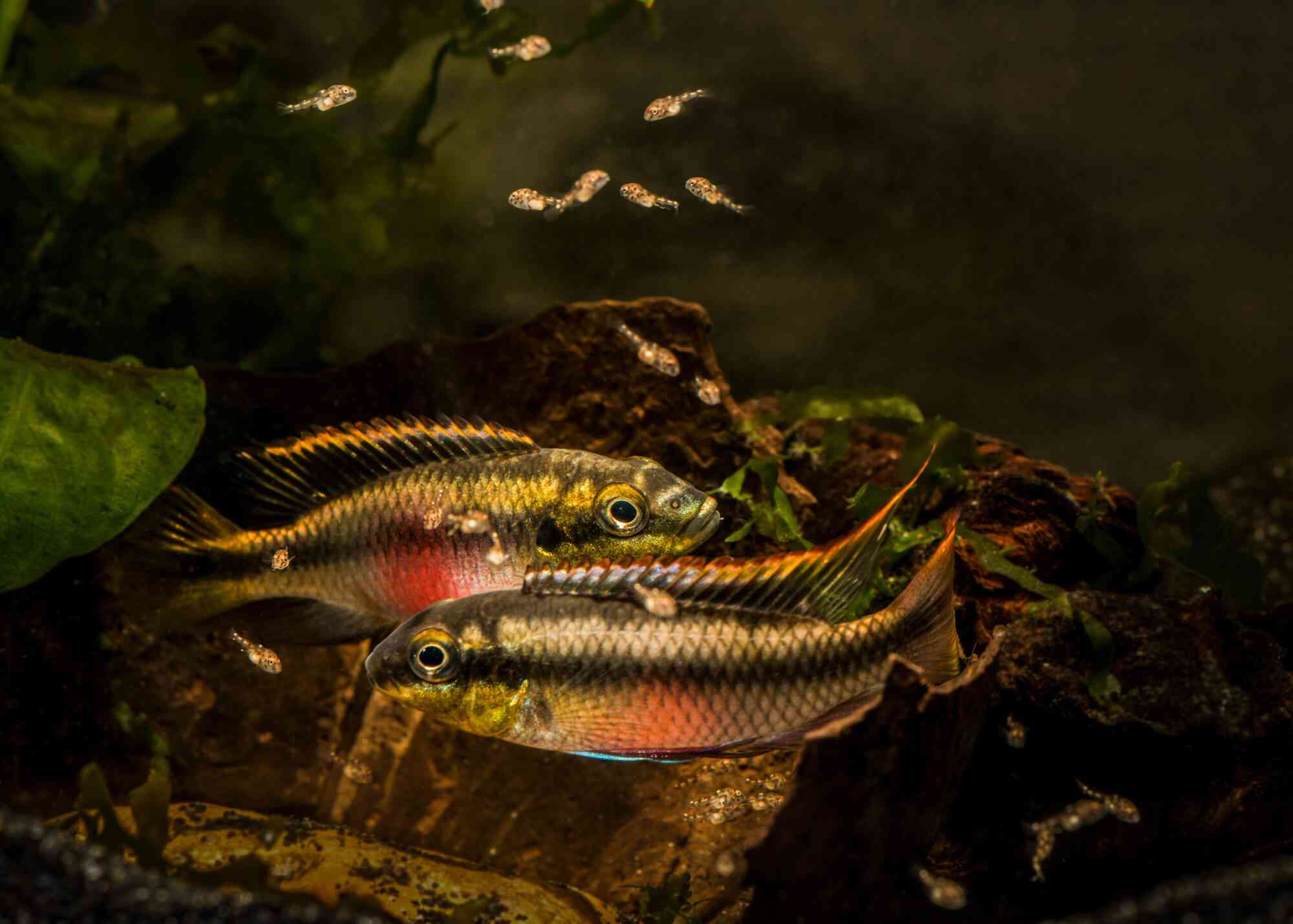
Kribensis or “Krib” (Pelvicachromis pulcher)
Jen: Kribensis, often called “kribs”, are found in West Africa and are a fantastic choice for a first cichlid. They’re beautiful with a rosy belly and striking spots, and they are not picky about food. They breed easily and are a joy to watch as they escort their brood of young around the tank to graze on other areas. But they can be very aggressive to tankmates in too small of an aquarium when they have fry, so keep kribs alone as a pair, or provide a larger aquarium than you think you need if part of a community. They’ll tend to be oriented to the bottom zone of the aquarium, so fast tankmates that use the middle or surface zones (for example, zebra danios) will stay out of their way more effectively.
Nora: Cichlids are some of the easiest fish in the hobby to breed, and kribs are a great fish for a first time breeder to try. Jen, you and I both have fishkeeping acquaintances whose tanks have quickly become overrun with krib offspring! The good news is that you can usually find a local fish store where you can trade juvenile fish you bred in for store credit—so you can buy more fish to breed!
Tips for Success with Kribs:
- Provide caves and hiding spots such as coconut huts and plenty of plants.
- Adaptable to most water conditions and foods.
- 20 gallons is okay for a pair, but if keeping them with other fish, larger is better (40 gallons works well). Even though kribs are relatively small fish, their attitudes when looking after fry are not.
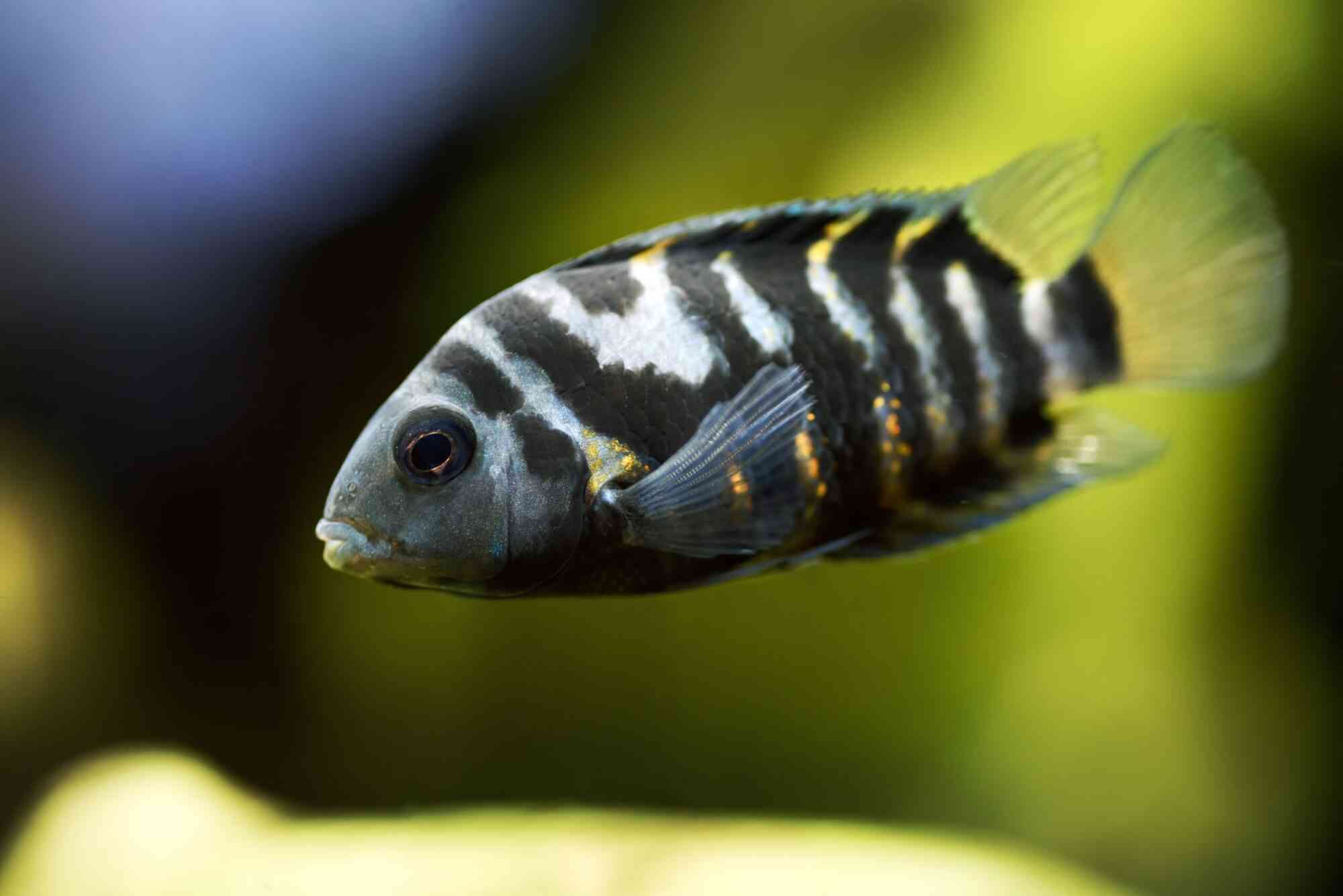
Convict Cichlid (Amatitlania nigrofasciata)
Jen: Convict cichlids must be the all-time easiest cichlid to keep. They’re pugnacious, striped, moderately sized at 8-10 cm, and adapt to all kinds of water quality. When they guard a batch of fry, they will need some space to defend. These fish will accept almost any food and are survivors. I have seen a few much larger aquariums and even some tropical ponds practically fill up with convict cichlids just from their relentless spawning and protection of the babies!
Nora: Cichlids are committed parents! Angelfish, kribs, and convict cichlids can be terrors in a community aquarium when spawning and protecting their offspring. Their parenting style can cause a lot of stress for both their fellow tank inhabitants and the fishkeeper, and all of these species may do best in a tank dedicated solely to them.
Tips for Success with Convict Cichlids:
- Just keep in water–they’re that easy to keep alive! 😉
- Get ready for babies, so many babies!
- 20-30 gallons is best for a pair, and consider larger aquariums than that to accommodate the inevitable hoard of youngsters or to keep suitably boisterous tankmates.
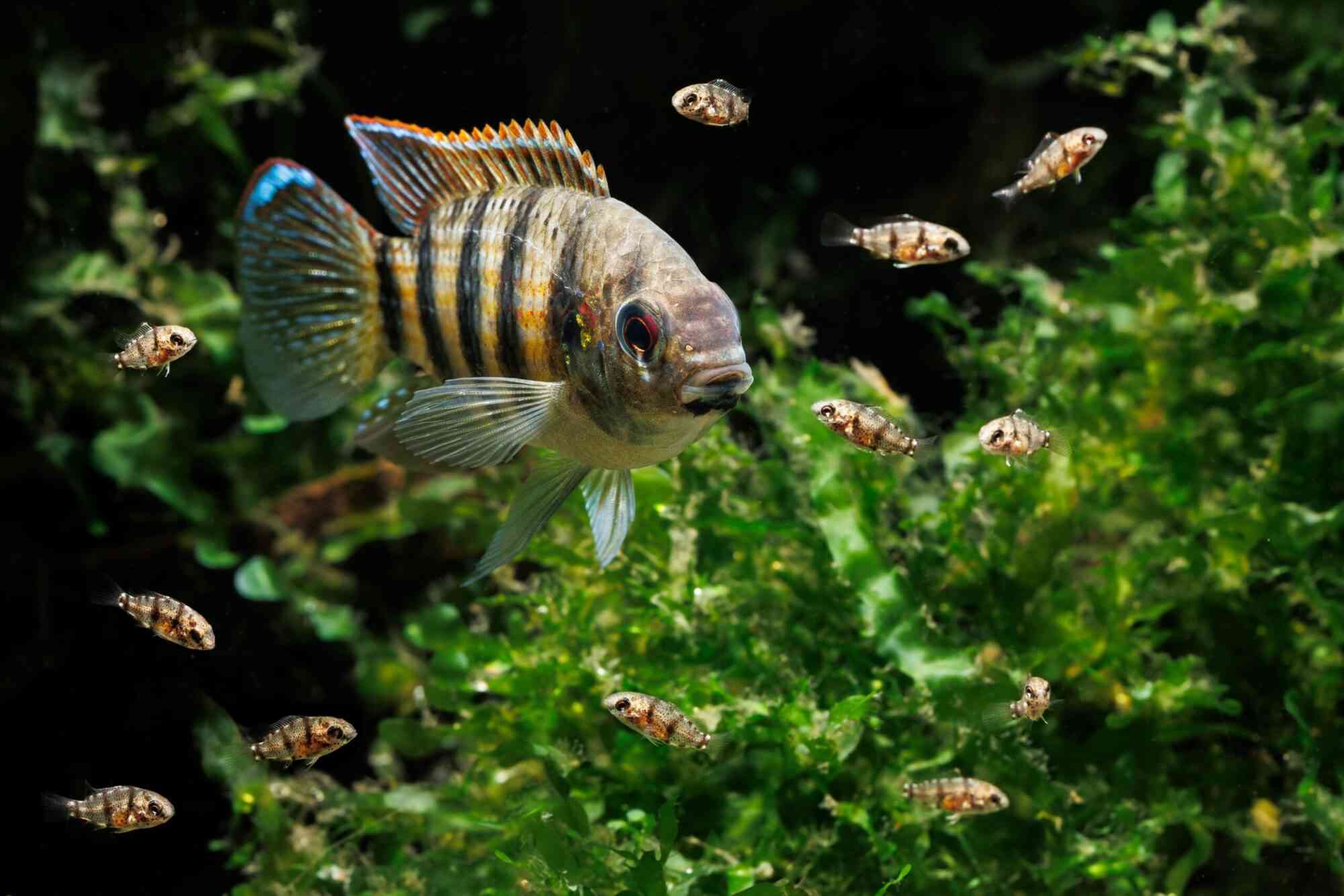
Butterfly Cichlid (Anomalochromis thomasi)
Nora: For some beginner-friendly cichlids more off the beaten path, what are a few other species you would recommend, Jen?
Jen: Another top choice, and among my most recommended, is the beautiful butterfly cichlid from West Africa. I find these more forgiving in terms of territoriality, other than when spawning—they are, after all, still cichlids. They are downright cute, if a bit understated due to their tendency to hide. With an adult size of 7-8 cm, they’re considered a dwarf cichlid, and adapt to a wide range of water conditions and food types. In my ideal fish world, these little butterfly cichlids would be far more popular and available than they are. They make great additions to a more peaceful, planted aquarium, since they don’t dig in the substrate the way some other cichlids tend to, and they really don’t ask for much to thrive. It doesn’t get much better than Anomalochromis thomasi as far as easy cichlids for beginners go!
Tips for Success with Butterfly Cichlids:
- Provide hiding areas so they feel secure: caves, pots, and plants are appreciated.
- Keep in a small group, along with other small, peaceful community species such as rasboras, cory catfish, etc.
- A pair should have 20 gallons; a small group is ideal and should have at least 30 gallons.
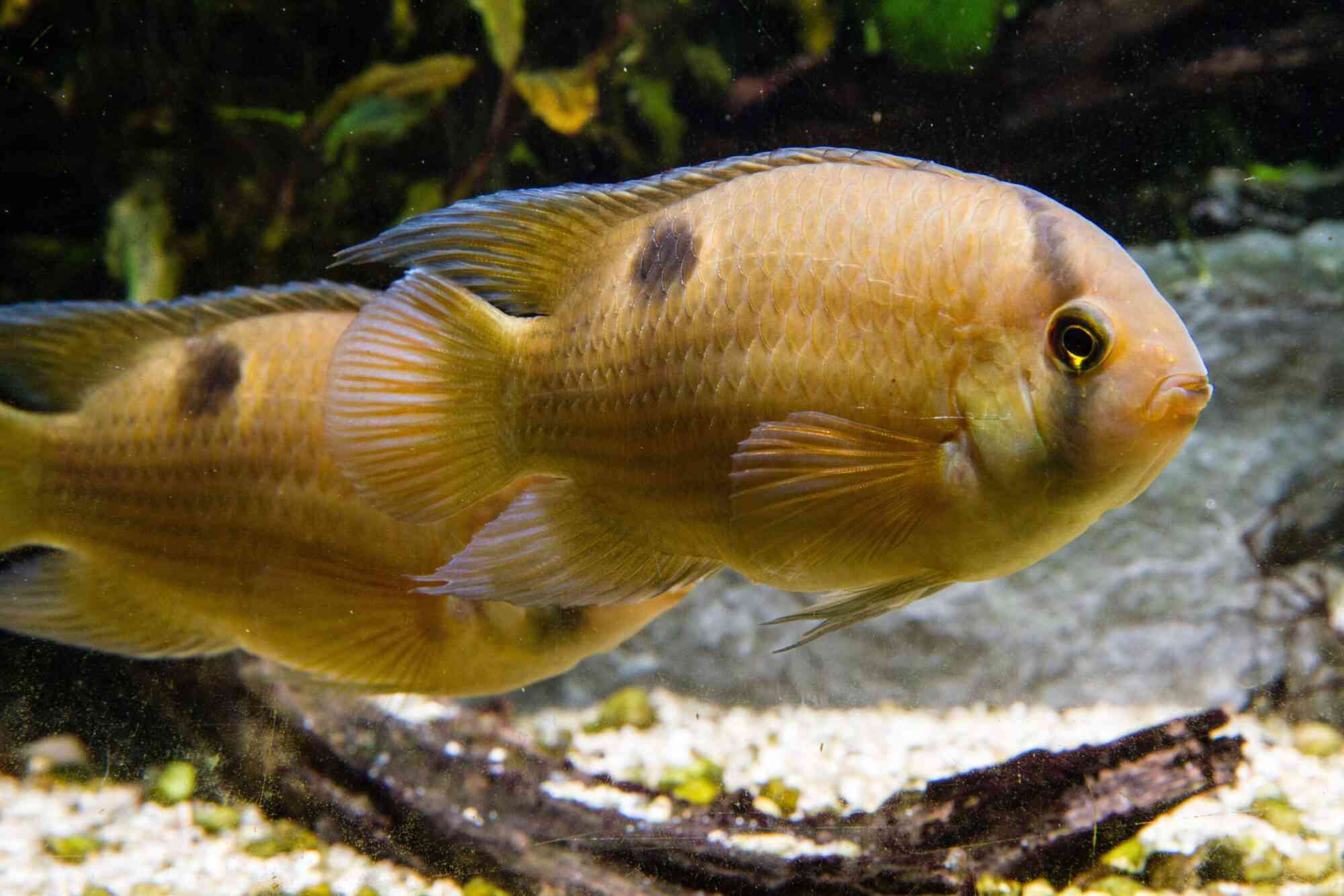
Keyhole Cichlid (Cleithracara maronii)
Jen: Keyhole cichlids aren’t always available, as perhaps their more subdued colours have led to them being less popular than they deserve. These South American cichlids are peaceful—docile, even—for a mid-sized cichlid, which I think is their strongest appeal. They have a delicateness to how they move that I appreciate, too. Quite frankly, these are the sweethearts of the cichlid world, something I can’t say about many on our list, especially the next two. Boisterous tankmates are not a good match for the easily-intimidated keyhole cichlid. Add keyhole cichlids to a medium-sized planted aquarium with chill tankmates and watch them come out of their shell, color up, and become friendly, inquisitive fish who won’t wear out their welcome.
Nora: I don’t have experience with either of these species. They both look like the kind of fish that is easy to pass over at the pet store when they are washed out and stressed but become very striking and fascinating additions when settled in at home. Both of these are unique fish that are worth waiting for!
Tips for Success with Keyhole Cichlids:
- Don’t keep them with fast, aggressive fish. Keep them with groups of smaller peaceful species such as bleeding heart tetras, rummynose tetras, rainbowfish. These fish can act as “dither fish” to help the keyholes feel comfortable.
- Add plenty of plants and driftwood to help them feel secure.
- A 30-40 gallon aquarium is recommended for a pair; a 55 gallon aquarium is a better size long term as they grow, and larger still if keeping them in a group, which is recommended to enjoy their docile behavior the most.
Oscar (Astronotus ocellatus)
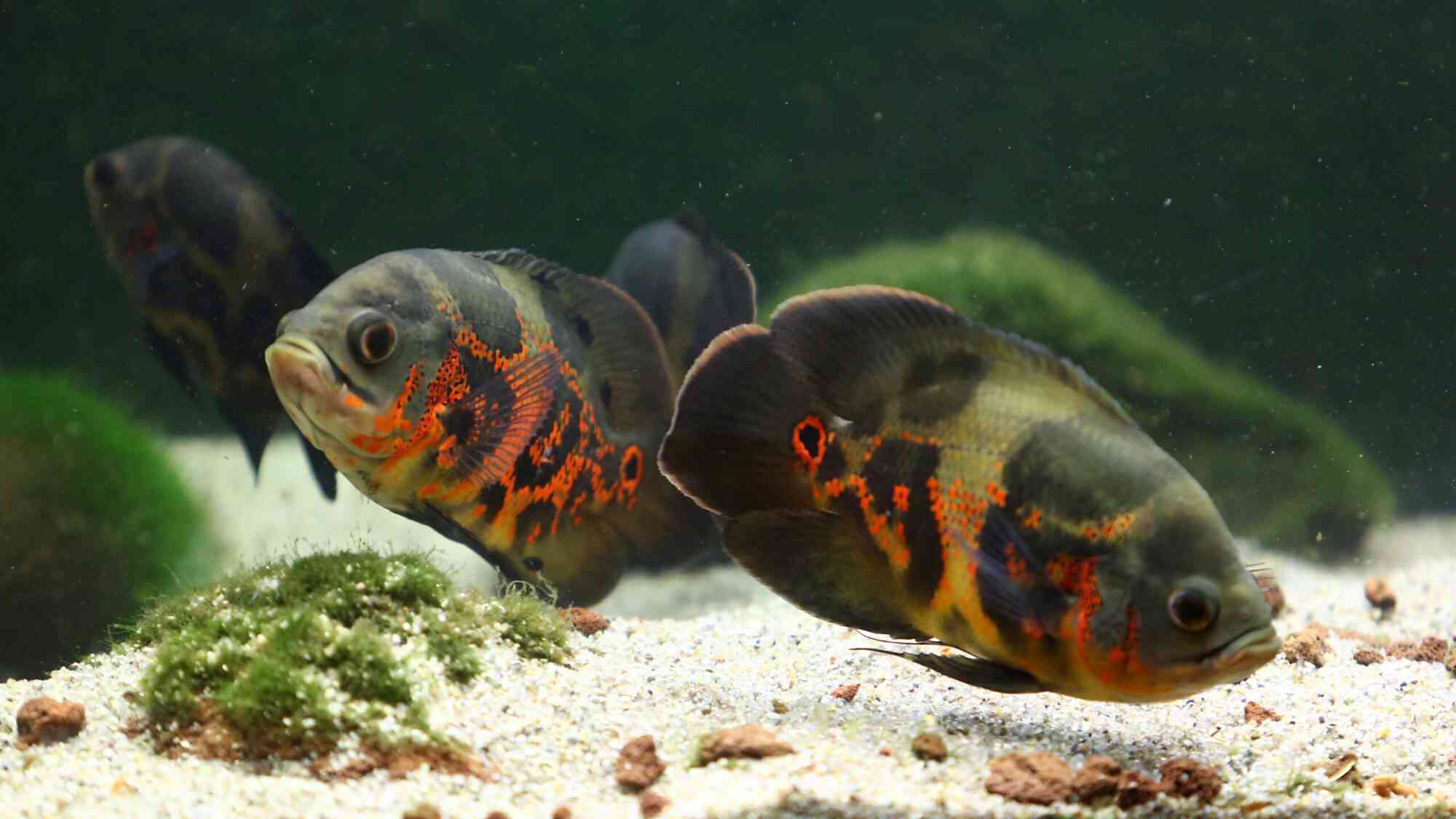
Nora: One fish that you don’t have to wait to find is the oscar–I think you can find these at almost any pet store selling fish. This is my very favorite cichlid! Oscars are by far the largest fish recommended here, and they need a big tank (at least 75 gallons). The well-known adage about keeping cichlids as either a single fish or a group larger than six definitely applies to oscars, and most people will only have the space to peacefully house a single oscar. This is no problem, though, because these fish have a big personality and just one oscar will become the star of your fish collection!
Jen: Both of us had great experiences with oscars when we were kids. I personally think part of that is because they were one of only a handful of cichlid species available to us at our local pet stores back in those days, and it’s really the essence of the classic cichlid personality that comes through with oscars. They’re so inquisitive and confident that they can really become a beloved pet. In my later, professional aquarist years, we had large displays at the Vancouver Aquarium and I got to see a pair of oscars protect their huge cloud of fry for the first time. It was an amazing sight to see, and in the wild they devotedly take care of their babies for a very long time. I think the big issue with these fish is that many people purchase them impulsively without realizing how large they can become (up to a foot long, or larger!) and how messy they can be in terms of ongoing maintenance of water quality. The way to enjoy oscars responsibly is to commit to a very large aquarium with significant mechanical filtration, and to commit to a regular regime of large water changes.
Nora: The upside is that with an appropriately-sized tank and adequate filtration, these fish are very easy keepers. Oscars will eat pretty much anything and thrive in a wide range of water conditions. The biggest challenges with them include keeping them from getting too fat and battling with them about tank decorations—they love redecorating!
Tips for Success with Oscars:
- 75 gallons is the ideal minimum size for one oscar. Larger is better, especially if keeping more than one!
- Don’t feed live “feeder fish”. Feeder fish can introduce diseases to your oscar and are not a good source of nutrition. For live food treats, crickets, mealworms, and earthworms are acceptable alternatives. Oscars accept pellet and gel foods with glee, too. Commercially available diets based on soldierfly larvae are a great choice to mimic their wild diet.
- They can be susceptible to Lateral Line Depigmentation, commonly referred to as Head and Lateral Line Erosion in the hobby. Focus on excellent water quality and a varied, nutritious diet to reduce the incidence of this.
Mbuna – A group of African cichlids from Lake Malawi
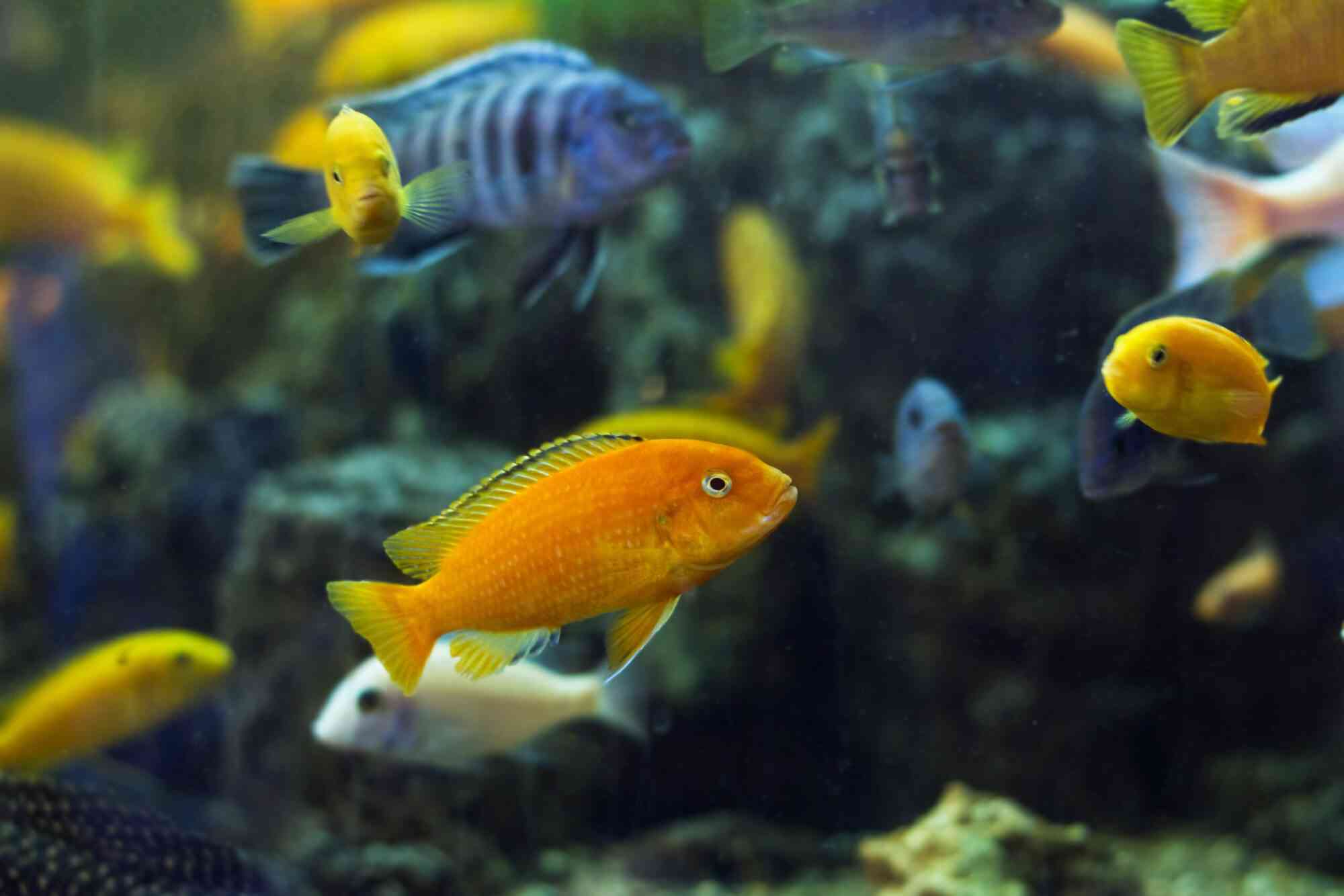
Nora: As a former PetSmart employee, I don’t think I can write an article about the best cichlids for beginners without including mbuna. These colorful, active cichlids always catch the attention of people browsing the fish wall at their local fish store. For someone who wants to 100% commit an aquarium to mbuna—and only mbuna—these cichlids make a dramatic display aquarium!
Jen: African cichlids from the rift lakes, like mbuna, can definitely be as entertaining as they are stunning and are well worth devoting a whole aquarium to. I remember when I first started keeping mbuna in aquaculture college, I realized that all of a sudden, I wasn’t feeling relaxed when watching my fish. These cichlid antics were keeping me on edge every day with their fighting, lip-locking, chasing, spawning… but then I became addicted to the complexities of cichlid behavior, and I would be bored without it!
Now for the really fun part: they are maternal mouthbrooders. That just never gets old. Females will pick the eggs up in their mouth and forgo feeding while they incubate their young. Then they release their babies among the rocks, and you get to enjoy colourful cameos from bright yellow, orange or blue fry as they dash out from the crevices to grab food. They’re just really fun fish.
What isn’t fun is when one fish is getting torn to shreds in the corner. The trick here is that if you want to keep mbuna without murder, you have to pretty much overstock the tank: if you keep them densely, and outnumber the males with females, the males have a much harder time defending one territory or harassing just one individual. It’s for this reason that I would hesitate a bit on recommending mbuna to a total beginner, but they can be a great next step for someone who has had success with a regular community tank and is ready to take on a bit more of a behavioral and water quality challenge with setting up an mbuna aquarium.
Select species that will not hybridize, such as those with different colours or from different genera. Classic choices include the yellow labs (Labidochromis caeruleus), Red zebra (Maylandia estherae), and the Golden mbuna (Melanochromis auratus) as a start.
Tips for Success with Mbuna:
- Mbuna require high pH, mineral rich water. Use commercially available Malawi buffer solutions if your tap water isn’t like this. Crushed coral substrate also helps.
- Use strong mechanical filtration such as hang-on power filters or canister filters, with additional aeration, and consider more than one filter since you’ll have to keep them very densely to manage aggression.
- Make sure your tank is adequately cycled or move an entire filter in from another tank since you will need to add a large number of mbuna at once to maintain peace.
- Staple diet should be a vegetable based flake food: they thrive on this food and long time mbuna keepers recommend avoiding high protein or frozen food like bloodworms, believing they cause “Malawi bloat”.
- 40 gallons is the minimum tank size—the bigger the better, so you can keep more species and pack them in densely.
So many fishkeepers start with cichlids, find themselves fascinated, and keep on working exclusively with cichlids for decades to follow! The topics and species we’ve covered today barely scratch the surface of what there is to know about the over 1,700 described species of cichlids and their amazing evolution and behaviour. For example, did you know that some cichlids mimic a decaying fish corpse, lay quietly in wait, and then eat the small fish who come to pick at it? Or that there is a species of cichlid which is hermaphroditic? Or that some cichlids cooperate with one another to help raise the babies from the dominant adults they live with?